

Our Approach
Personalized Treatment
Our surgical team specializes in laparoscopic gallbladder surgery. Typically, laparoscopic techniques are preferred as a means of treating symptomatic gallstone disease.
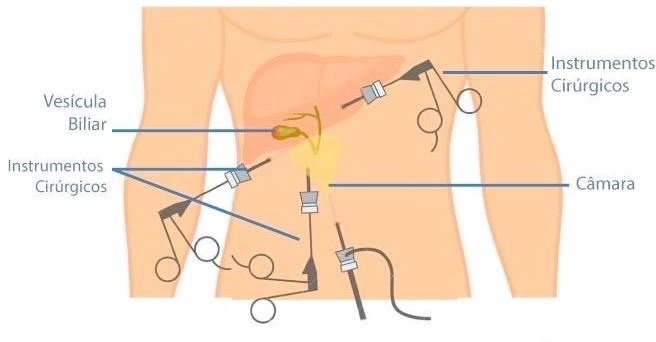
Currently, medicine has two types of surgeries to remove the gallbladder, namely:
- Open or conventional surgery: This is the most common surgery. It is performed through a cut in the abdomen, just below the patient's right rib, so that the doctor can visualize the structures to be operated on.
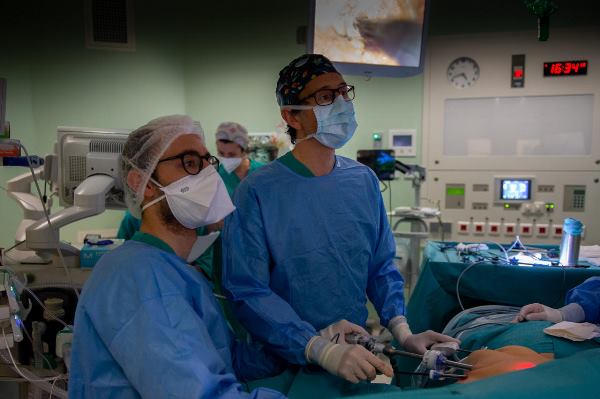
- Laparoscopic cholecystectomy: In this type of procedure, small holes are made in the patient's abdomen. Surgical instruments and a camera are inserted through them. The images from this camera are displayed on an enlarged monitor, from which the surgeon can accurately visualize the area of the gallbladder and thus avoid possible damage to healthy tissues.
For whom a cholecystectomy is indicated
Cholecystectomy is indicated for patients who have some types of illnesses, such as:
- Symptomatic vesicular lithiasis
- Gallbladder tumors
- Biliary pancreatitis
- Lithiasic cholecystitis
- Acalculous cholecystitis
- Biliary colic
- History of acute cholecystitis
- Presence of some types of vesicular polyps
Preoperative Cholecystectomy
It is not enough to have a biliary problem to undergo surgery. First, the doctor will conduct an interview with the patient and request tests, in order to find out their health and then determine whether surgery is viable or not. If so, it is also determined which technique is best to avoid the risk of complications as much as possible.
The tests requested are: coagulation study, complete blood count, creatinine, liver bilateral test, fasting blood glucose and electrocardiogram. Eventually and if deemed necessary, the doctor may request other complementary tests to those already mentioned, such as a cholangio-resonance scan or abdominal ultrasound.
In the preoperative period, the patient will be instructed to stop smoking (if a smoker), in order to avoid pulmonary complications resulting from the procedure, as well as to eat a healthy diet and adjust medications. Medications that interfere with blood clotting should be temporarily discontinued by the doctor.
Gallbladder surgery
The only form of treatment is surgical removal of the gallbladder (cholecystectomy). Other treatments, such as lithotripsy (“breaking the stones”), medications to dissolve them or just removing the stones do not work, and should not be used as they only delay correct treatment.
Laparoscopic cholecystectomy
The gallbladder surgery is performed via laparoscopy (hole surgery), with 4 small incisions that can vary from 2 to 10 mm each. The instruments are introduced through these “holes” and, with the help of a video monitor, the gallbladder and calculations are extracted.
If the stones are larger than 10 mm, they will be broken into a bag and then removed through one of the small incisions, along with the gallbladder.
Post-operative
Usually recovery from gallbladder removal surgery is quick, taking just a few days. The operated area must always be clean to avoid infection or inflammation. In most cases, the stitches are internal, but when done externally, they are removed ten days after surgery.
Short walks in a flat environment are recommended, avoiding absolute rest. If the patient tolerates it and under the guidance of a professional, they can perform light physical activities that do not strain the abdomen.
Eating should be light, as in the post-operative period of most surgical procedures. It is important to note that the function of the gallbladder is to store bile, however, it does not produce it. This way, the liver will continue to produce and release it directly into the intestine, without harm to the patient's health or well-being.