

The gallbladder is an organ located in the abdomen, to the right and below the liver, next to the stomach. The function of the gallbladder is to store and concentrate bile, which is produced by the liver, and helps with the digestion of food, especially fats.
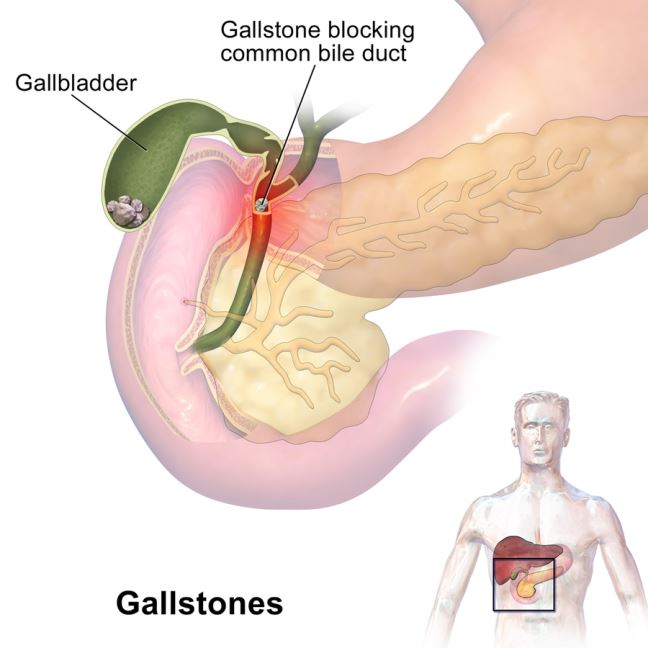
Gallbladder stone
Gallstones, cholelithiasis or gallstones are a very common disease, found in around 10% of people. Anyone can have gallstones, but some are more likely, such as:
- Age: Although this disease can affect even children, it increases with age and is more common in adults and the elderly.
- Women: Gallstones are more common in women than in men, especially if they have already become pregnant.
- Obesity: The more obese you are, the greater the possibility of having gallstones. However, thin people can also have stones.
- Heredity: People who have family members with stones are more likely to have this disease than those who don't.
How is stone (calculus) formed in the gallbladder?
Bile is produced in the liver and is eliminated in the intestine. Bile helps in the digestion of fatty foods. It contains several substances, including cholesterol and pigments. When some of these substances increase in quantity in the bile, they can be deposited in the gallbladder. Over the months and years, these deposits come together and form stones (stones).
Types of gallstones
Gallstones can be of two types: cholesterol or pigmentary. Cholesterol is more common and is formed when there is an imbalance between the components of bile. Pigmentary disorders are more prevalent in certain populations and arise due to conditions that affect the production of bilirubin.